Parking Lot Striping in Knoxville, TN
Parking lot striping and line marking in Knoxville, TN — layout, re-striping, ADA stalls, and traffic markings. Call (865) 500-5861 for a free quote.
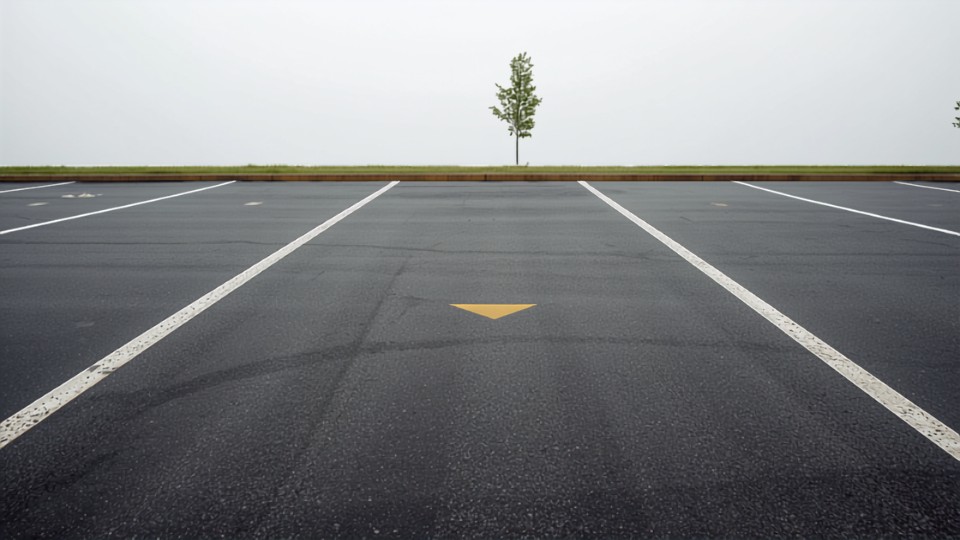
Striping is the cheapest thing on a commercial property that changes how the property behaves. Faded lines cost you stalls, because drivers park to what they can see rather than to what was originally laid out. A lot that held sixty cars holds fifty-two once the lines go, and nobody notices the loss because it happens a season at a time.
Layout Is the Part That Matters
Re-striping an existing pattern is straightforward. Deciding whether the existing pattern is the right one is the part worth a conversation.
Stall width is the lever most property owners never touch. Narrow stalls fit more cars on paper and produce door dings, mis-parks, and drivers who take two spaces rather than risk it. Wider stalls lose you a row and gain you a lot that people use properly. Which way to go depends on what the lot is for — a medical office with older patients and a retail strip with quick turnover want different answers, and a church lot that fills twice a week wants a third.
Drive aisles, turning radii for delivery vehicles, and where the traffic actually wants to flow all come before paint. A lot that fights its own traffic pattern will keep having the same problems no matter how crisp the lines are.
Accessible Parking
Accessible stalls, access aisles, signage and van-accessible spaces are governed by federal requirements and by what the local authority enforces, and the specifics depend on the size of the lot and what changed. This is worth getting right at layout stage rather than after a complaint, and it is a question to put to the authority having jurisdiction for your property rather than to take from any contractor's rule of thumb, including ours.
What we will do is lay out and mark accessible stalls, access aisles and the associated markings to the layout your property requires, and flag anything in an existing lot that looks like it no longer matches current expectations so you can check it.
When To Stripe, and the Sequence That Ruins It
Striping goes last. After paving, after repairs, and after sealcoating — never before. Sealcoat over fresh lines buries them; lines over unsealed asphalt get sealed over at the next maintenance cycle and paid for twice. If a lot is due for both, the order is seal first, cure, then stripe.
On brand-new asphalt there is a wait. New pavement needs to cure before paint goes down, or the markings will not hold. Temporary layout marks can go down sooner if the lot has to open, with permanent striping once the surface is ready.
Paint, and Why Lines Fade at Different Rates
Traffic paint is the standard for most lots — it goes down fast, dries fast, and the lot reopens the same day. It wears at the rate the traffic dictates, which means the entrance drive and the aisles closest to the door fade years before the back row does.
That uneven wear is worth knowing when you get a quote. A full re-stripe of a lot whose back half is still sharp is money you may not need to spend this year. A partial re-stripe of the high-traffic areas keeps the lot legible and pushes the full job out. It will look slightly uneven for a season, and for a lot of properties that trade is worth making.
Snow ploughs are the other accelerant. A blade riding on the pavement scrapes markings off in a single hard winter, and lots that get ploughed regularly stripe on a shorter cycle than lots that do not.
The Markings Beyond the Stalls
Fire lanes, no-parking zones, loading areas, directional arrows, stop bars, crosswalks, speed bump markings, numbered stalls, reserved and visitor spaces, and curb painting all fall under the same visit. Doing them together costs less than doing them one at a time, because most of the cost of a striping job is getting set up and getting the lot clear.
Getting the Lot Clear
The practical problem with striping is not the paint, it is the cars. A lot has to be empty in sections while the work happens and empty long enough afterwards for the paint to dry. That means early mornings, evenings, or weekends for most working properties, and it means notice to tenants or congregants.
Tell us the hours you genuinely cannot afford to lose and we will phase the lot around them rather than the other way round. A property with several lots can usually be sequenced so nothing is ever fully closed.
Parking Lot Striping FAQ
How often should a parking lot be re-striped? It depends far more on traffic and ploughing than on the calendar. A busy retail lot in a snow-ploughed winter needs it sooner than a low-traffic office lot. The practical test is whether a driver can read the layout from the entrance — if they cannot, you are losing stalls.
Should I sealcoat before or after striping? Seal first, always, then stripe once it has cured. Striping first means paying for lines that get covered at the next seal.
How long before cars can park on fresh lines? Traffic paint dries quickly and most lots reopen the same day, with the timing depending on temperature and humidity. We will give you a real number for the conditions on the day rather than a stock one.
Can you change the layout rather than repaint what is there? Yes, and it is often the better question. Stall width, aisle direction and where the accessible stalls sit are all worth revisiting, particularly if the use of the property has changed since the lot was laid out.
Do you stripe new asphalt? Yes, once it has cured enough to hold paint. If the lot has to open before then, temporary markings can go down and permanent striping follows.
Can you do it outside business hours? Yes. Most commercial striping happens early, late, or at weekends because the lot has to be clear. Tell us the windows that work and we will build the schedule around them.
Do you handle fire lanes and ADA markings too? Yes, along with arrows, stop bars, crosswalks, numbered and reserved stalls and curb painting. Doing them on one visit costs less than splitting them across several.
Get Your Striping Quoted
Call (865) 500-5861 with the property address and roughly how many stalls. If you want the layout looked at rather than just repainted, say so — that is a different conversation and usually a more useful one.