Asphalt Resurfacing in Knoxville, TN
Asphalt resurfacing in Knoxville puts a new wearing course over a drive or lot that is worn but still structurally sound. Call (865) 500-5861 for a free quote.
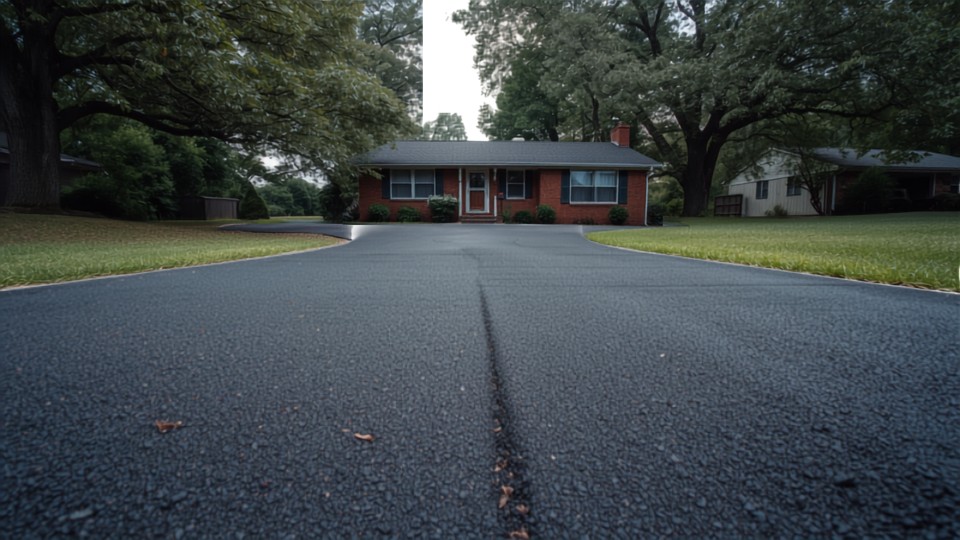
Resurfacing is the middle option, and it is the one most people have never had explained to them. A driveway that looks tired is not automatically a driveway that needs tearing out. If the base underneath is still doing its job, a new mat over the top buys you most of the life of a new drive for a good deal less than a full replacement. If the base is finished, resurfacing is money set on fire, because the new asphalt will crack exactly where the old asphalt cracked, on roughly the same schedule.
The One Question That Decides It
Is the failure in the surface, or is it in the base?
Surface failure looks like oxidation, raveling, shallow shrinkage cracks, minor rutting, faded colour, loose aggregate coming up on your shoes. The mat has aged. The gravel under it is intact. That drive is a resurfacing candidate.
Base failure looks different, and once you know the pattern you cannot unsee it. Interconnected cracking in a web, roughly the size of your hand or smaller, is the classic sign — the pavement is flexing under load because the layer beneath is no longer supporting it. So are depressions that hold water after a storm, edges that have crumbled inward, and any spot that feels soft or moves under a car tyre. Put an overlay on that and you have bought a smooth surface with a countdown on it.
The honest version of this conversation happens on site, standing on the drive. Anyone who quotes a resurfacing job over the phone without looking at where the water goes is guessing.
Why East Tennessee Punishes a Thin Overlay
Knox County sits on clay, and clay is the reason resurfacing here is a judgement call rather than a default. Clay holds water, swells when it takes it on, and shrinks when it dries out. That cycle works on a pavement from below all year, and then winter adds freeze-thaw on top of it — water gets into a crack, freezes, expands, opens the crack a little wider, and the next thaw lets more water in behind it.
Add the terrain. Very little of this county is flat. A sloped drive concentrates run-off along one edge or straight down the middle, and that is usually where you will find the first failure. A resurfacing job that ignores drainage is a resurfacing job with a short warranty on the reality side, whatever the paperwork says.
What Gets Done Before the New Mat Goes Down
Cleaning. Every bit of loose material, vegetation, and dirt comes off. Asphalt bonds to asphalt, not to the silt sitting on top of it.
Milling the edges, where it is needed. A drive that meets a garage floor, a concrete apron, or a public road cannot simply gain two inches of height at that joint. Milling cuts the old surface down at the transitions so the finished level still works. Skipping this is how you end up with a lip at your garage door and water running the wrong way.
Repairs to any failed section. Localised base failure gets cut out and rebuilt before the overlay, not covered by it. If there is too much of it, that is the point where resurfacing stops being the right answer.
Tack coat. A thin bituminous bond between old and new. Without it the two layers are stacked rather than joined, and a stacked overlay shears and slips under turning traffic.
Then the mat. Laid, raked at the edges, and compacted while it is still hot enough to move. Compaction is where the durability comes from, and it is the step you cannot inspect afterwards.
How Much Surface Does an Overlay Add
Ask for the compacted figure, not the loose one. Asphalt is placed loose and rolled down, so a number quoted loose is meaningfully less finished pavement than the same number quoted compacted. Two quotes can look identical and describe different jobs on exactly this point. It is a fair question and any straight answer to it tells you something about who you are talking to.
Resurfacing, Repair, and Replacement
Repair is local — a patch, a cut-out, a crack treatment on an otherwise sound drive. Resurfacing is the whole surface on a sound base. Replacement is the whole thing, base included, and it is the right call when the ground under the pavement is the thing that failed. What each one costs is broken down in our Knoxville asphalt driveway cost guide.
They are not a ladder you climb in order. Plenty of drives go straight from healthy to replacement because the base was under-built in the first place, and plenty of others take a resurfacing at the right moment and get another long run out of it. The decision belongs to the condition of the drive, not to how long it has been since the last work.
Timing
Asphalt wants warm ground and warm air. Late spring through early autumn is the working window in this part of Tennessee. Paving into cold ground means the mat loses heat before it is properly compacted, and a mat that was not compacted properly does not get better later. There is no way to tell by looking at it the following week, which is precisely why the timing matters.
Asphalt Resurfacing FAQ
How do I know if my driveway can be resurfaced? Look for whether the damage is on the surface or coming from underneath. Oxidation, raveling and shallow cracks point to resurfacing. Web-shaped cracking, standing water, soft spots and crumbling edges point to replacement. A quote given without someone walking the drive is not an answer to this question.
How long does resurfacing last? On a sound base, prepared properly and sealed on a sensible schedule, an overlay gives you many years of service. On a failing base it will crack through in a season or two, in the same pattern the old surface cracked. The base decides.
Is resurfacing cheaper than replacing? Yes, and that is exactly why it gets recommended when it should not be. Cheaper is only a saving if the base is genuinely sound. Otherwise it is paying twice.
Will resurfacing fix my drainage problem? Not by itself. An overlay follows the shape of what is under it. Grade and drainage have to be addressed as part of the work or the new surface inherits the same puddle in the same place.
Do you have to mill before an overlay? At transitions, usually yes — garage aprons, concrete pads, and where the drive meets the road. In the open middle of a drive, often not. It depends on what the finished height needs to be.
Can you resurface a parking lot without closing it? Commercial work is normally phased so sections stay usable. Tell us the hours you cannot afford to lose and we will build the sequence around them.
Get Your Resurfacing Quoted
Call (865) 500-5861 and tell us what the surface is doing now. If the base is sound, we will say so. If it is not, we will say that too — an overlay on a failed base is not a saving.