Commercial Paving in Knoxville, TN
Your parking lot is the first thing a customer experiences and the last thing most owners budget for. It’s also a liability surface — potholes and faded striping are the kind of thing that shows up in a claim. Call (865) 500-5861 for a free quote.
Commercial Lots Are a Different Job
A parking lot isn’t a big driveway.
Loads are heavier and constant. Delivery trucks, dumpster pickups, and daily turnover put demands on the base that a residential drive never sees. Dumpster pads in particular are where lots fail first — a garbage truck’s lifting arms concentrate enormous load in one spot.
Drainage is engineered, not incidental. A lot has to move water across a large area to specific points. Ponding is both a failure accelerant and a trip-and-fall exposure.
Downtime costs money. Nobody can close their lot for a week. Phased work, off-hours scheduling, and keeping half the lot live while the other half cures is part of the job.
Striping is safety and compliance. Faded lines, unclear fire lanes, and worn accessible spaces are risks, not cosmetics.
Building a Lot for the Loads It Actually Carries
The whole spec on a commercial lot is driven by the heaviest thing that regularly crosses it, not by the average car. A lot needs a deeper, stronger aggregate base than a driveway, and often a two-lift asphalt structure — a binder course for strength under a surface course built to wear — because the loads are heavier and never stop coming. The smart version doesn’t build the whole lot to the same heavy spec, either: the drive aisles and truck routes where delivery vehicles turn and brake get the heavy section, while low-traffic parking stalls can be built lighter. Designing to the real traffic pattern is how a lot lasts without paying to over-build every square foot.
Dumpster pads deserve their own mention because they fail first almost everywhere. A garbage truck drops its stabilizers and lifts a full container in the same footprint, day after day, concentrating enormous load through a tiny area. A pad built to the surrounding lot’s spec craters; a pad built for that duty — thicker, sometimes concrete — doesn’t. If your lot has one soft, broken spot and it’s under the dumpster, now you know why.
Drainage Across a Large Surface
A driveway sheds water off its edges and it’s done. A parking lot has to move water across a large, mostly flat surface to specific collection points — catch basins, drains, the edges that run to a swale — without leaving low spots in between. Ponding on a lot is a double problem: it soaks the base and shortens the lot’s life, and it’s a slip-and-fall and ice exposure that becomes your liability the first cold morning. Getting the slopes and the drainage points right during paving is far cheaper than chasing standing water with patches afterward.
What We Do
Parking lot installation and reconstruction. Resurfacing and overlays for lots with sound bases. Pothole and full-depth repair. Sealcoating on the cycle a commercial lot needs — which is more often than a driveway, because of traffic volume. Line striping and re-striping, including accessible spaces and fire lanes.
Maintenance Costs Less Than Replacement
The math on a commercial lot is straightforward and most owners run it too late. Crack filling and sealcoating on a schedule costs a fraction of resurfacing. Resurfacing costs a fraction of reconstruction. The lots that end up needing a full rebuild are almost always the ones where nobody spent the small money for ten years.
If your lot is still structurally sound, the cheapest thing you’ll ever do is keep it that way.
Striping, Accessibility, and Fire Lanes
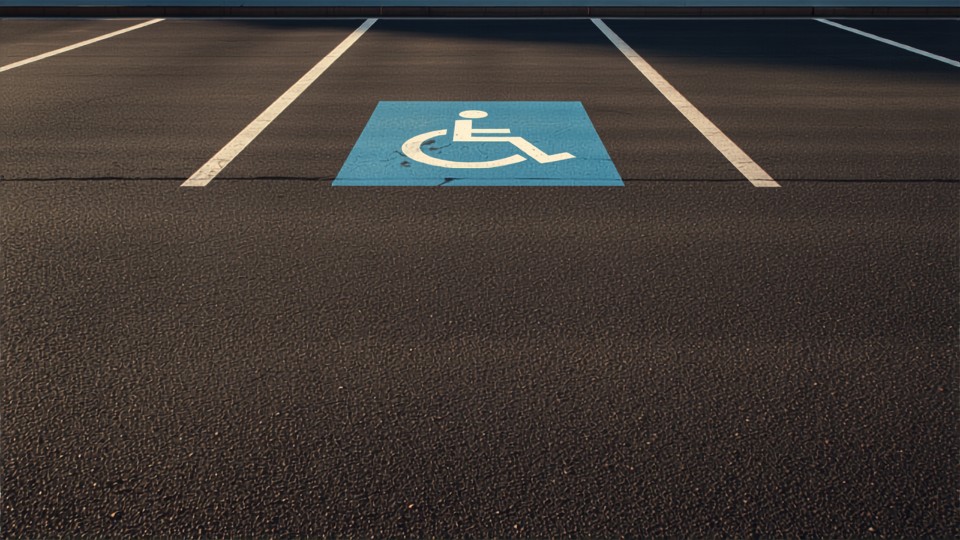
Fresh striping is the cheapest thing on a lot and the most visible. Beyond keeping traffic organized, it’s where accessibility and code live: accessible parking spaces of the right dimensions with their striped access aisles, van-accessible spaces where required, clearly marked fire lanes, crosswalks, stop bars, and directional arrows. Faded or missing markings aren’t just untidy — worn accessible spaces and unclear fire lanes are exactly the kind of thing that turns into a complaint or a claim. We re-stripe after resurfacing and sealcoating, and we can lay out a re-stripe on an existing lot to bring the markings back to legible. For anything with specific code or permit requirements, you’ll want to confirm the current standard for your property, and we’ll stripe to the layout you need.
New Construction, Overlay, or Reconstruction
Three different jobs get called “repaving,” and they’re very different numbers. New construction is a lot built from raw ground — subgrade, base, and asphalt from scratch. An overlay lays a fresh surface course over a lot whose base and structure are still sound, restoring the surface for a fraction of a rebuild. Reconstruction is for a lot that’s failed structurally — the base is gone in enough places that a surface fix won’t hold — and means removing and rebuilding, often in phases to keep you open. The right call depends entirely on what’s under the surface, which is why we assess before recommending, and why we’ll tell you when an overlay buys you years and a rebuild would be wasted money.
Serving Knoxville-Area Businesses
Commercial paving in Knoxville and Knox County means property managers, retail centers, churches, HOAs, medical offices, and industrial sites — from the Cedar Bluff and Papermill corridors to the lots off Broadway and Chapman Highway — and each one has a different tolerance for being closed. Multi-property owners, ask us about putting all your properties on one maintenance schedule.
Commercial Paving FAQ
Can you work after hours? Yes — night and weekend work is normal on commercial lots. We’ll schedule around your operation.
How long will my lot be closed? Depends on scope. Most work can be phased so you’re never fully closed.
How often should a commercial lot be sealcoated? More often than a driveway — traffic volume drives the cycle. We’ll assess yours.
Do you handle striping? Yes, including accessible spaces and fire lanes. See parking lot striping for how layout and paint are handled.
Should we repair, overlay, or rebuild the lot? It depends on whether the failure is in the surface or the base. Oxidation, raveling and shallow cracking on a lot that drains well points to an overlay. Web-shaped cracking, standing water after a storm, and areas that move under a loaded truck point to reconstruction of those sections. Most lots need a mix, and phasing it over two seasons is often cheaper than doing the whole surface at once.
Get Your Lot Quoted
Free assessment and an honest read on whether you need maintenance, resurfacing, or reconstruction. Call (865) 500-5861.