Asphalt Paving in Knoxville, TN
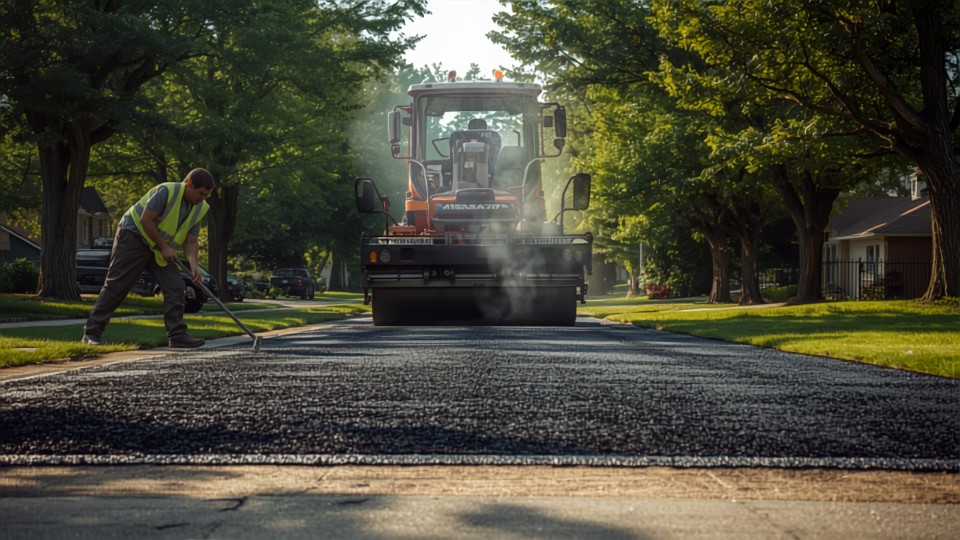
Asphalt is the right surface for most Knoxville properties — it goes down fast, it flexes with our clay instead of cracking against it, and when it’s built correctly it lasts twenty years or more. The catch is that almost everything determining that lifespan is buried where you’ll never see it. Call (865) 500-5861 for a free quote and a straight answer about what your property actually needs.
What Actually Makes Asphalt Last
Everyone looks at the black surface. The surface is the least important part.
The base is the job. Under your asphalt sits a compacted aggregate base — usually four to six inches of crushed stone, sometimes more under a driveway that takes trucks. That base spreads the load and, critically, drains. Skip depth or skip compaction and the mat above it is riding on wet East Tennessee clay. It will fail, and no amount of good asphalt on top prevents it.
Compaction is not optional. Asphalt has to be rolled while it’s hot, in the right sequence, to the right density. Under-compacted asphalt looks identical on day one and is porous, which means water gets in, which in this climate means freeze-thaw takes it apart from the inside.
Thickness has to match use. A residential driveway that sees two cars is a different spec than one that sees a landscaping trailer or an RV. Two inches of surface course over a good base is typical residential; heavier use wants more. Anyone quoting the same thickness for every job isn’t measuring anything.
Grade decides drainage. We get roughly four feet of rain a year here. Water has to go somewhere. A driveway that holds a puddle after a storm is a driveway with a countdown on it.
What a New Asphalt Installation Involves
A proper install is a sequence, and each step sets up the next. We strip the area down to competent subgrade, hauling off topsoil and any old failed material rather than burying it. We shape and compact that subgrade to the grade the finished drive will follow — this is where drainage is won or lost, before a single load of stone arrives. Then aggregate base goes down in lifts and gets compacted to the depth the use calls for, not eyeballed and raked out. Only then does asphalt get laid hot and rolled to density, in the right roller sequence, before it cools past the point where compaction does anything. Finally the edges get built and supported and the site gets cleaned up. Skip the strip-and-grade to save a day and you’ve built a good-looking driveway on top of a problem you’ll pay for later.
New Installation vs. Resurfacing
Not every tired driveway needs tearing out, and we’ll tell you which you’re looking at.
Resurfacing (overlay) puts a new surface course over the existing asphalt. It works when the base is still sound and the problems are cosmetic or shallow — oxidation, minor cracking, worn surface. It’s a fraction of the cost of a replacement and buys you another decade.
Full replacement is the answer when the base has failed. The tell is alligator cracking — that interlocking web that looks like reptile skin. That’s the subgrade moving underneath, and overlaying it just means you’ll see the same pattern telegraph through the new surface within a year or two. Paying twice.
Plenty of driveways we look at can be resurfaced. We’d rather tell you that than sell you a tear-out you don’t need.
Joints, Edges, and the Details That Leak
The failures that show up first usually aren’t in the middle of the mat — they’re at the seams. Where fresh asphalt meets an existing surface, or where one day’s paving meets the next, a cold joint has to be cut clean and sealed or water finds it and works down into the base. Where the driveway meets the street, the most repetitive heavy loads on the whole drive land on that transition, so it gets built up to full depth, not feathered thin to save material. And an unsupported edge — asphalt with nothing but air beside it — crumbles under the first tire that clips it, which is why a real edge gets backfilled and compacted. None of this is visible on day one. It’s the whole difference in year five.
Paving Season in East Tennessee
Asphalt needs heat to compact. The working window in Knoxville runs roughly March through November — you want ambient temperatures above 50°F and rising, not falling. A late-fall pour on a cold subgrade doesn’t achieve density no matter how hot the mix was when it left the plant.
Spring and early fall are the sweet spots. Midsummer works fine, and it’s when paving companies are busiest, so it’s the season where getting a callback is hardest. Plan ahead if you can.
What to Expect on Install Day
Fresh asphalt stays soft for weeks. You can usually drive on it within a day or two, but for the first month treat it gently — avoid turning your wheels while stopped, keep trailer jacks and kickstands on a board, and don’t park in the same exact spot every day in July heat. It cures harder over its first season. We’ll walk you through it before we leave.
Asphalt Paving FAQ
How much does asphalt paving cost in Knoxville? It depends on square footage, base condition, access, and grade. We quote free and upfront — call (865) 500-5861.
How long does a driveway take? Most residential driveways are a one- to two-day job, depending on whether the base needs rebuilding.
Do I need to remove the old driveway? Not always. If the base is sound, an overlay may be the better call. We’ll assess it honestly.
How long will it last? Built right, twenty years or more in this climate — longer with sealcoating and crack maintenance.
How thick should my driveway be? Two inches of surface course over a solid base is typical for a car-and-a-half residential drive. If you park an RV, a loaded trailer, or delivery trucks, you want more asphalt and often a binder course under it. The honest answer depends on what actually rolls across it, which is why we measure instead of quoting one number for everyone.
Can you pave over my existing asphalt or concrete? Over sound asphalt, an overlay is often the right call. Over concrete it’s possible, but it has to be done knowing concrete moves at its joints and that movement can telegraph up through the asphalt — so we look first and tell you whether it’s a good candidate.
Get Your Asphalt Quoted
Tell us what you’re working with and we’ll come look. Free quote, honest recommendation, no pressure. Call (865) 500-5861.